
Maths
Arithmetic, fractions, decimals, percentages, algebra, geometry, data handling and problem-solving. We develop fluency and mathematical reasoning.
Whole Curriculum Adaptation for Maths
Most learning apps adapt within a single topic – if your child struggles with a question, they see an easier one.
HeyKitsu goes further. Our Whole Curriculum Adaptation looks across everything your child is learning and builds a path that makes sense.
If they're confident with fractions but finding ratio problems challenging, we'll adjust – and we'll also recognise when strengthening decimals and percentages will unlock that ratio understanding.
The result is a learning journey that builds connections between topics, strengthens weaknesses and keeps your child challenged across the entire maths curriculum.
Full curriculum coverage for Maths
Algebra
8Algebra is like solving puzzles with numbers and letters. Instead of just using numbers, we use symbols (like x or y) to stand for something we don't know yet. You'll learn how to uncover what those letters mean by spotting patterns, using logical steps, and keeping both sides of an equation balanced. Once you get the hang of it, algebra becomes a powerful tool for solving problems and understanding how different parts of maths fit together.

Algebraic fractions
Learn how to simplify algebraic fractions like "84p/6" or "54v²/18v", by canceling common factors. Discover how to divide coefficients and simplify expressions involving variables to their simplest algebraic form.

Complex sequences
Explore sequences that follow more complex patterns, like number sequences, shape patterns or fraction sequences. Learn how to identify the rules behind challenging sequences, predict missing terms and work with patterns involving multiple operations or mathematical relationships.

Equations with two unknowns
Learn about problems with two unknowns (variables). Discover how to use systematic trial and error, logical reasoning and algebraic thinking to find all possible combinations or specific values that solve equations and real-world puzzles.

Finding the Nth term
Discover number sequences that follow rules, such as "7, 12, 17, 22" where 5 is added each time, or "2, 8, 32, 128" where each term is multiplied by 4. Learn how to identify the pattern in a sequence, determine whether it involves adding, subtracting or multiplying and describe the rule that generates each term.

Introducing variables
Learn how to write and simplify algebraic expressions, like "3a + 5b − 2a" or "4 × n + 7", by collecting like terms and understanding coefficients. Discover how to translate word problems into mathematical notation and simplify expressions involving multiple variables.

Rearranging equations
Explore how to rearrange equations to make different variables the subject, such as changing 2x + 5 = y to make x the subject. Learn how to use inverse operations to move terms systematically between sides of equations, isolate any variable you need and express relationships in different forms to solve problems.

Solving equations
Explore how to find unknown values in equations by using inverse operations, such as solving 3x + 5 = 20 to find x. Learn how to balance equations by performing the same operations on both sides, isolate variables step-by-step and apply these techniques to solve real-world problems involving unknown quantities.

Substitution
Learn about substitution, which means replacing letters with numbers in expressions. Discover how to substitute given values for variables, work through calculations in the correct order and evaluate algebraic expressions to find numerical answers.
Core calculations
5Core calculations is where you learn the essential methods for tackling real-world maths problems. Instead of just relying on quick mental maths, you'll master the step-by-step techniques needed to work out longer problems involving big numbers, money and time. You'll discover how to effectively use methods like short and long multiplication and division. You'll also learn to break down complex word problems into simple calculations, giving you the confidence to solve maths questions that look tricky at first glance.

Solving word problems
Explore mathematical challenges presented as real-life scenarios, such as working out change from a shop purchase. Learn how to read word problems carefully, identify the mathematical operations needed and solve multi-step problems by breaking them down into smaller calculations.

Time
Understand time and how to work with it, including converting between units like "30 minutes = 1800 seconds" or "2 hours = 120 minutes", and calculating times like "3:45 pm + 35 minutes = 4:20 pm". Learn how to add and subtract time intervals, convert between seconds, minutes and hours, and work out start or end times for activities and events.

Working with money
Understanding money means working with pounds (£) and pence (p). Learn how to add, subtract, multiply and divide amounts of money, work out unit prices and totals, and solve practical problems involving buying, selling and sharing costs.

Written division
Learn about written division methods, particularly short division (the "bus stop" method), for dividing larger numbers like "456 ÷ 8" or "735 ÷ 5" that are too difficult to do mentally. Discover how to set out division problems formally, work through them step-by-step and use this method to solve real-world problems involving sharing or grouping.

Written multiplication
Learn about written multiplication methods, like long multiplication and the grid method. Discover how to set out multiplication problems in columns, multiply systematically by breaking numbers into place values and use these formal methods to solve real-world problems involving repeated groups or scaling quantities.
Data and averages
9Data is all about collecting, organising and understanding information. It helps us make sense of the world, from sports scores and weather reports to survey results and science experiments. You'll learn how to display data clearly using bar charts, pie charts, line graphs and tables, and how to describe what the numbers show using averages like mean, median and mode, as well as range. You'll also explore probability - how likely something is to happen - and use tools like Venn diagrams and scatter charts to spot patterns and connections. Get ready to uncover the stories hidden in the numbers.

Averages from graphs
Discover how to read bar charts and calculate totals. Learn how to interpret information from graphs and calculate averages and totals from the data they display.

Bar charts
Learn how to read and interpret bar charts, which use rectangular bars to display data visually. Discover how to extract information from charts, compare values and answer questions about the data shown.

Line graphs
Discover graphs that use connected points to show how things change over time, like "daily temperatures across a week" or "number of books read each month". Learn how to read information from line graphs, compare trends between different lines and estimate missing values by following patterns.

Mean
Understand the mean (or average) as adding all values together and dividing by how many there are. Learn how to calculate the mean from sets of numbers, work backwards to find missing values when the mean is known and solve real-world problems involving averages.

Median, mode and range
Explore three ways to describe data: the range (such as "a 20-point spread in test scores"), the median (such as "the middle height in a class") and the mode (such as "the most popular colour choice"). Learn how to calculate range, median and mode from data sets.

Pie charts
Learn how to read and interpret pie charts, which display data as coloured segments of a circle. Discover how to calculate percentages and fractions from pie chart segments, work out missing values when given one part and use pie charts to compare different categories of data.

Scatter graphs
Learn about scatter graphs, which plot points to show relationships between two variables, like "hours of sunshine and temperature" or "age and height". Discover how to read coordinates from scatter graphs, identify patterns showing positive or negative correlations and use the graphs to make predictions.

Tables
Discover how to read and extract information from tables showing organised data. Learn how to find specific values in tables, compare information between rows and columns, calculate totals and differences, and identify the highest or lowest values to answer questions about the data.

Venn diagrams
Learn about Venn diagrams, which use overlapping circles to show relationships between groups. Discover how to read the different sections to find how many belong to one group only or more than one group, and use Venn diagrams to solve problems involving sorting and counting data.
Fractions, decimals and percentages
13Fractions and decimals are two ways of showing parts of a whole. They help us describe quantities that aren't whole numbers - like half a pizza, three-quarters of a chocolate bar, or part of a glass of juice. You'll learn how to compare, order, add, subtract, multiply and divide them, and how to switch between fractions and decimals when solving problems. Understanding how they connect makes many areas of maths easier, from measurement and shape to algebra and data. See how fractions and decimals work hand in hand.

Calculating percentages
Learn how to calculate percentages, like finding 25% of 80 or working out what percentage 15 is of 60. Discover how to find parts of amounts, calculate the whole when given a percentage and solve real-world problems involving discounts, sales and proportions.

Comparing and ordering percentages
Learn how to compare percentages using symbols like <, > and =, and order them from smallest to largest or vice versa. Discover how to compare percentages to fractions and visual representations, and work out which values are greater, smaller or equal in real-world situations.

Converting decimals and fractions
Learn how to convert between fractions and decimals, like changing 2/5 to "0.4, by dividing or finding equivalent forms. Discover how to express fractions as exact decimals or recurring decimals, and convert decimal numbers back into fractions in their simplest form.

Decimal addition and subtraction
Master adding and subtracting numbers with decimal points, like "1.25 + 3.47" or "12.5 − 8.3". Learn how to line up decimal points correctly and solve real-world problems involving money, measurements and distances.

Decimal multiplication and division
Learn how to multiply and divide numbers with decimal points, like 2.5 × 6 = 15. Discover how to calculate totals when multiplying decimals, share amounts equally by dividing decimals and solve practical problems involving measurements, money and data.

Fraction addition and subtraction
Learn how to add and subtract fractions, like "2/3 + 1/4" or "5 1/2 − 2 3/4", by finding common denominators. Discover how to work with mixed numbers and simplify your answers to their simplest form.

Fraction division
Discover how to divide a fraction by a whole number, like 2/3 ÷ 4. Learn how to calculate these divisions and solve problems about sharing or splitting fractional quantities equally.

Fraction multiplication
Discover how to multiply fractions together and with whole numbers, like "1/2 × 3/4". Learn how to calculate these products, simplify your answers and solve problems about combining or scaling fractional amounts.

Mixed numbers and improper fractions
Explore fractions written in two different forms: improper fractions like 9/4 where the numerator is larger than the denominator, and mixed numbers like 2 1/4 that combine whole numbers with fractions. Learn how to convert between these two forms and understand when each way of writing fractions is most useful.

Ordering and comparing fractions
Discover how to work out which fractions are bigger or smaller, such as comparing 5/8 and 7/12. Learn how to order fractions from smallest to largest, use comparison symbols like < and > correctly and determine which fraction has the greatest or least value.

Percentage increase and decrease
Explore how to increase or decrease quantities by percentages, such as 80 increased by 25%. Learn how to calculate percentage increases and decreases, work out what percentage remains after a reduction and compare results of different percentage changes.

Rounding and recurring decimals
Learn about rounding decimal numbers to a specific number of decimal places (d.p.), and recurring decimals that repeat forever, like 0.333.... Discover how to round accurately by looking at the next digit and how to recognise and write recurring decimals using dot notation.

Working with fractions
Learn how to work with fractions in different ways, like finding "1/5 of 30 = 6", working out the whole when "3/4 equals 21" or simplifying "36/9 = 4". Discover how to calculate fractions of amounts by dividing, find the total when you know a fractional part and convert improper fractions into whole numbers or mixed numbers.
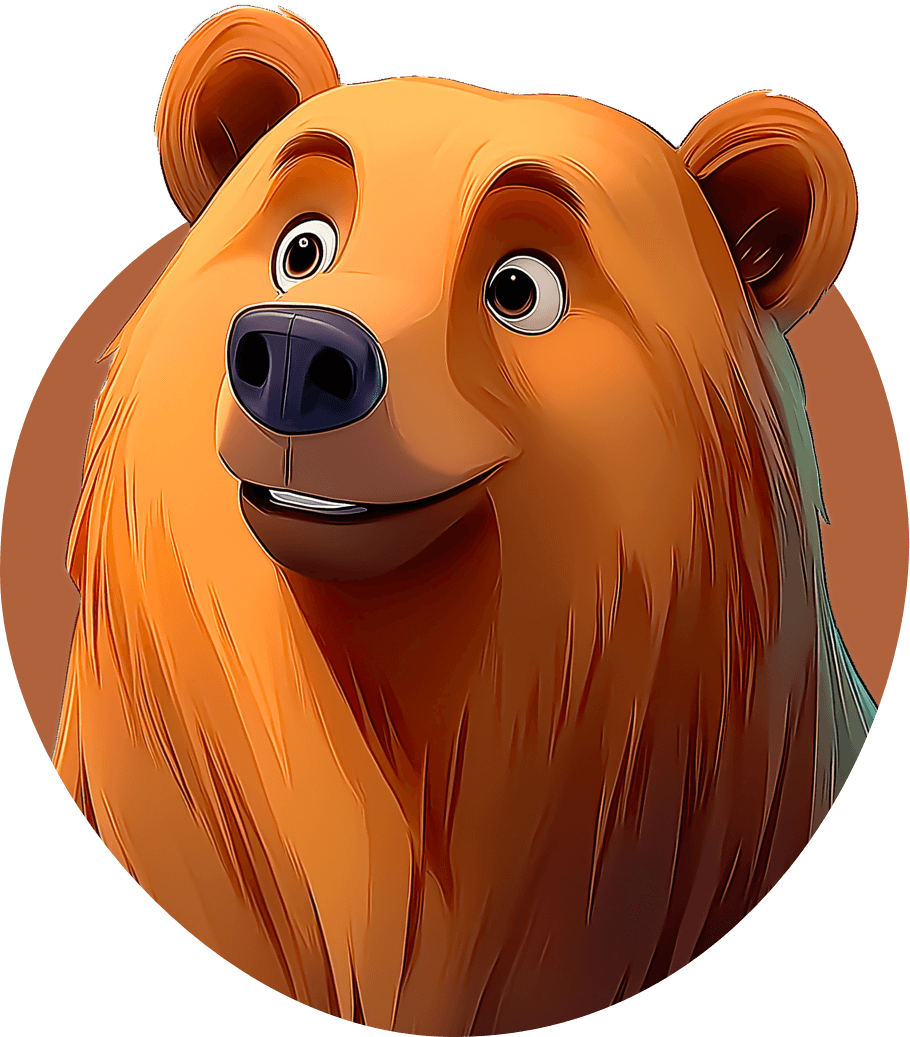
Learning made fun
Our friendly characters guide your child through each topic, celebrating their progress and keeping them motivated along the way.
Measurement and formulae
7Measurement helps us describe and compare the world around us. It's how we work out how long, heavy or tall something is, how much space it takes up, or how fast it's moving. You'll learn to measure and calculate things like length, area, perimeter, volume, and surface area, and to use the right units for each one. You'll also explore time, speed, and conversions between metric units. From timing a race to finding the area of a garden, measurement turns real-world problems into numbers you can work with.

Area
Understand area as the amount of space inside a two-dimensional shape, measured in square units like cm² or m². Learn how to calculate the area of rectangles, squares, parallelograms and triangles using formulas and solve practical problems.

Length and perimeter
Understand length as measuring how long or far something is, and perimeter as the total distance around the edge of a shape. Learn how to calculate perimeters of different shapes including regular polygons, find missing side lengths and solve practical problems involving measurements.

Metric units
Learn about the metric system of measurement, which includes units like metres (m), centimetres (cm), kilometres (km), kilograms (kg), grams (g), litres (l) and millilitres (ml). Discover how to convert between different metric units by multiplying or dividing by 10, 100 or 1000.

Speed
Understand speed as how fast something moves, measured in units like 30 kilometres per hour or 15 metres per second. Learn how to calculate speed from distance and time, work out distance travelled at a constant speed and find how long journeys take using the relationships between speed, distance and time.

Surface area
Discover how to calculate the total area of all faces of 3D shapes. Learn how to find the surface area of cuboids and cubes, work out which faces to include when shapes have missing sides and apply these skills to solve real-world problems about painting, wrapping or covering objects.

Units of area and volume
Learn how to convert between different units of area, like square centimetres (cm²) and square metres (m²), and volume units, like millilitres (ml) and litres (l). Discover the relationships between metric units and how to multiply or divide by the correct amounts to change from one unit to another.

Volume
Discover how to measure the space inside 3D shapes, called volume, measured in cubic units like cm³ or m³. Learn how to calculate the volume of cuboids by multiplying length, width and height together, and solve problems about storage space and how much containers can hold.
Number foundations
7Numbers are at the heart of all maths. They help us count, compare, calculate and understand patterns in everything from shopping totals to the stars in the sky. Explore how numbers connect and behave; learning about factors, multiples, primes, squares and cubes, as well as how to work with negative numbers and percentages. You'll also practise using the correct order of operations and solving word problems step by step. Understanding numbers builds a strong foundation for every other topic in maths.

Brackets and order of operations
Learn how to use brackets in expressions to group calculations that should be done first, like "3 × (4 + 5)" or "(12a − 8a) × 2". Discover how to simplify expressions containing brackets and how to factorise expressions by putting common factors outside brackets.

Factors and common factors
Understand factors as whole numbers that divide exactly into another number, like 1, 2, 5 and 10 being the factors of 10. Learn how to find all factors of a number, identify common factors shared between numbers and use the highest common factor (HCF) to solve practical problems.

Multiples and common multiples
Explore numbers that result from multiplying by whole numbers, such as "12, 18 and 24 are multiples of 6". Learn how to find common multiples of two numbers and discover the lowest common multiple to solve real-world problems about repeating patterns and cycles.

Negative numbers
Understand negative numbers as values below zero, like -5°C for temperatures below freezing, -20 m for depths below sea level or -£15 for money owed. Learn how to add and subtract negative numbers, place them on number lines and solve problems.
.png&w=64&q=75)
Order of operations (BIDMAS)
Master the correct order for solving calculations with multiple operations, using BIDMAS: brackets first, then indices (powers), then division and multiplication, finally addition and subtraction. Learn how to work through complex calculations step by step, applying each operation in the correct sequence.

Prime numbers and factor trees
Understand prime numbers as numbers greater than 1 that can only be divided by 1 and themselves, like 2, 3, 5, 7 and 11. Also learn to use factor trees to break down numbers like 48 into their prime factors. Discover how to identify prime numbers, create factor trees to find all prime factors of a number and express any whole number as a product of primes.

Squared and cubed numbers
Explore numbers created by multiplying a number by itself two or three times, such as "25 is 5 squared (5²)", "100 is 10 squared" and "8 is 2 cubed (2³)". Learn how to calculate squared and cubed numbers, identify perfect squares and cubes in lists and sequences and use these special numbers to solve mathematical problems.
Ratio, proportion and chance
6Ratio and proportion help us compare quantities and keep things in the right balance. They show how one amount relates to another, like mixing squash, sharing snacks, or reading a map to scale. You'll learn how to write and simplify ratios, find missing values, and use scale factors to make drawings or models larger or smaller. You'll also explore proportion, where two things change in the same way. Once you understand these ideas, you'll start to see ratios and proportions everywhere, in recipes, designs, and even science experiments.

Chance and simple probability
Understand probability as the likelihood of an event happening, expressed as a fraction like 3/10 or 1/4, where higher values mean more likely. Learn how to calculate simple probabilities in everyday situations like picking cards or choosing items.

Introducing ratios
Discover ratios as a way to compare quantities, like "12 red counters to 8 blue counters" written as "12:8". Learn how to write ratios from real-world situations, simplify them to their simplest form by finding common factors and work with both two-part and three-part ratios.

Probability with two events
Explore situations where two or more events happen together, like "rolling a 4 and flipping heads" or "drawing two aces from a deck". Learn how to calculate the probability of combined events happening, whether they are independent or depend on each other.

Proportions
Understand proportions as parts of a whole expressed as fractions, like "3/4 of pupils" or "2/5 of the total", showing relationships between quantities. Learn how to calculate proportions from given amounts, find remaining proportions when some parts are known and work out actual numbers from fractional parts in real-world situations.

Ratio problems
Understand ratios as a way to compare quantities. Learn how to simplify ratios, work with three-part ratios, convert ratios to fractions and use ratios to solve problems involving proportional relationships.

Scale factors
Discover how to work with scale factors and ratios to convert measurements. Learn how to calculate real sizes from scaled drawings, solve proportion problems and convert between different units and time periods using scaling relationships.
Shapes and position
4Geometry is the study of shapes, space and how things fit together. It helps us understand the lines, angles and patterns that make up the world around us, from the corners of a book to the curve of a wheel. You'll explore different kinds of shapes, like triangles, quadrilaterals, polygons and circles, and learn how to measure and describe them accurately. You'll also look at how shapes move and turn, and how to plot their positions on a grid. Geometry is all about seeing the hidden structure in the world, once you start noticing it, you'll spot it everywhere!

Angles
Learn about angles, including acute angles (less than 90°), obtuse angles (greater than 90°) and reflex angles (greater than 180°). Discover how to calculate missing angles using the rules that angles on a straight line add up to 180° and angles around a point add up to 360°.

Coordinates and position
Discover how to describe exact locations on a grid using pairs of numbers called coordinates, such as "(2, 7)" or "(4, 9)". Learn how to read coordinates from plotted points, mark new positions on a grid and use coordinate rules to identify locations and complete shapes like rectangles.

Quadrilaterals
Explore four-sided shapes called quadrilaterals, including parallelograms, trapeziums, rhombuses and kites, each with their own special properties. Learn how to calculate missing angles, identify different types of quadrilaterals from their properties and recognise lines of symmetry in these shapes.

Triangles
Explore three-sided shapes where the angles always add to 180°. Learn how to calculate missing angles in triangles, use the angle sum property to solve problems and work with special triangles including those with right angles or equal sides.
Explore other subjects


Start practising Maths today
Download HeyKitsu and begin your child's personalised learning journey with a free diagnostic assessment.
Get HeyKitsu