
Vocab Expander: HeyKitsu's latest feature
Introduction
If you ask most parents what their child needs to work on for the 11+, you'll hear the usual suspects: reading comprehension, maths, non-verbal reasoning...
Vocabulary rarely makes the list – even though it underpins almost everything.
A child who doesn't know what "harrowing" means can't fully engage with a comprehension passage that uses it. One who reaches for "said" when "murmured" would be sharper is leaving marks on the table in creative writing. And in vocabulary sections of papers like the ISEB Common Pre-Test, knowing the difference between "wistful" and "melancholy" isn't a nice-to-have.
We've been wanting to address this for a while. Today, we're launching Vocab Expander – a new feature built specifically around the vocabulary that comes up in 11+ entrance exams: whether you're preparing for GL, ISEB Pre-Test, Quest or FSCE.
How it works
Vocab Expander covers words across three tiers – Easy, Medium and Hard – each targeting a different band of vocabulary.
At Easy level, children encounter words like arduous, turbulent, cunning and resolute: a step up from everyday language, but very much within reach of a capable Year 5 or Year 6 student.
Medium moves into richer territory – formidable, tempestuous, conspicuous, gregarious. Words you'd expect to see in a well-written passage, and words that can derail comprehension answers if a child doesn't know them.
Hard goes further still. Some are descriptive words that carry real literary weight – ethereal, ominous, wistful, sinister – and some are analytical terms that come up when students are asked to discuss how a text works: protagonist, antagonist, foreshadow, imagery, tone.
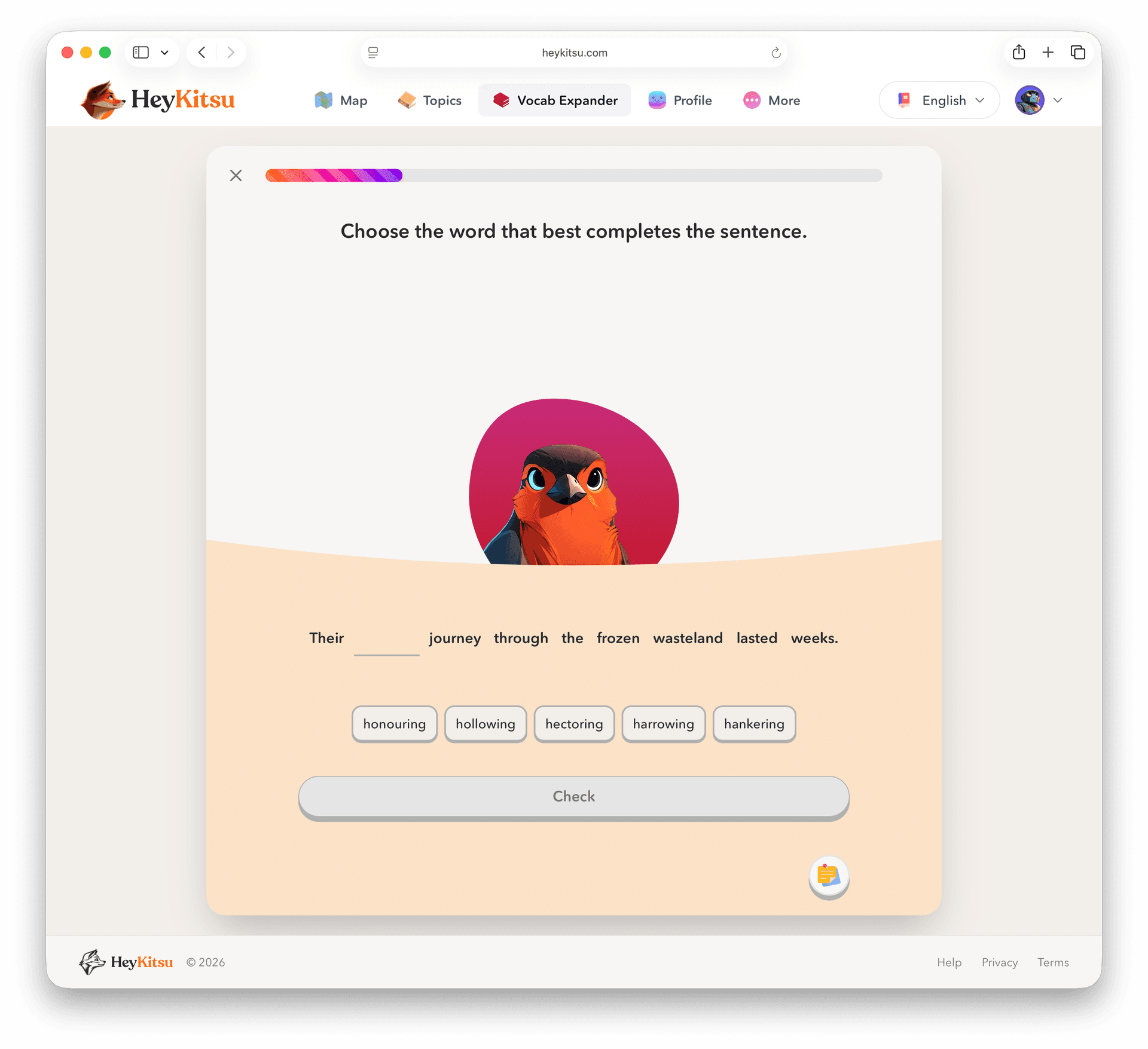
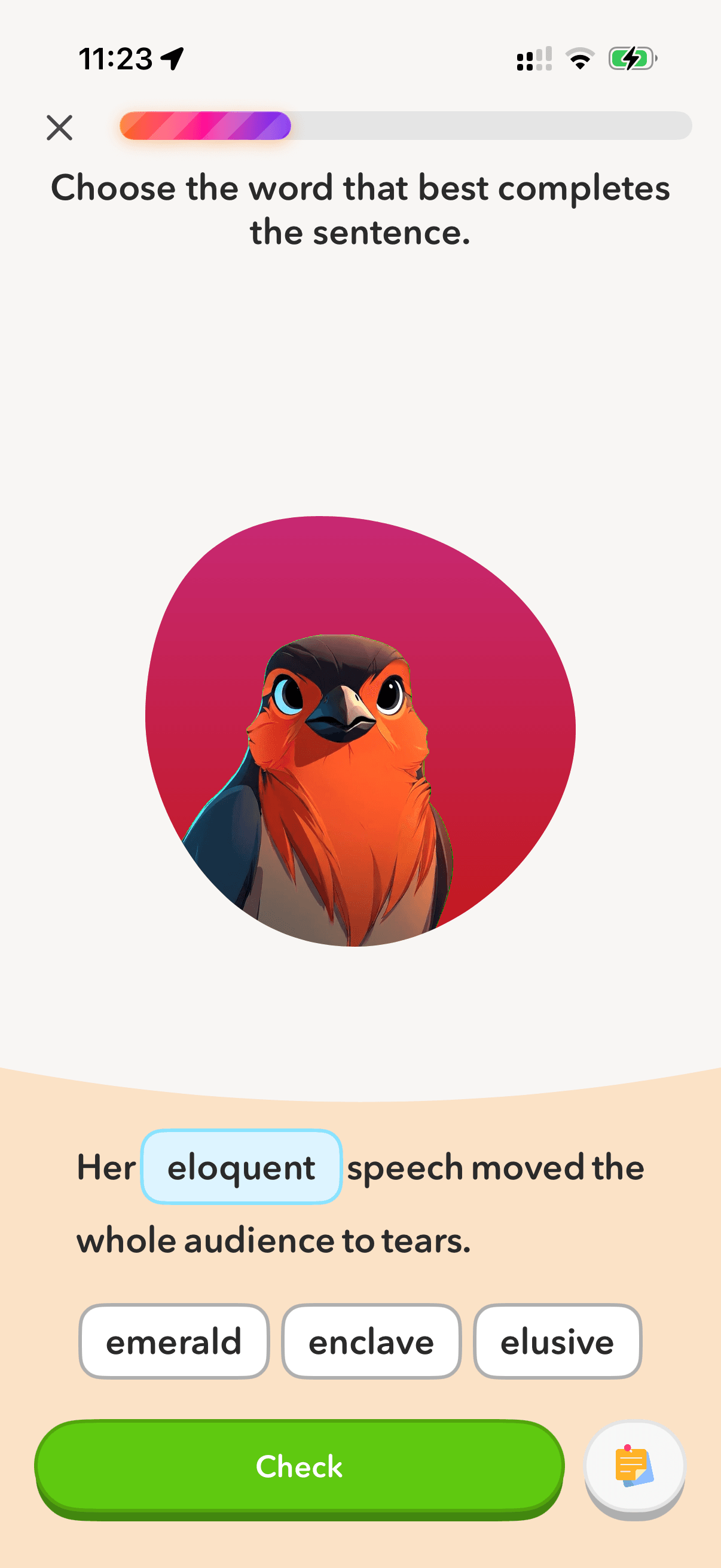
Questions come in different formats: choosing the word that best fills a gap, replacing a weaker word with a stronger one, or picking the most vivid option from a set of unfamiliar choices. The wrong answers aren't obviously wrong – all the options are challenging, so children have to actually know what a word means to get it right.
Tracking progress, word by word
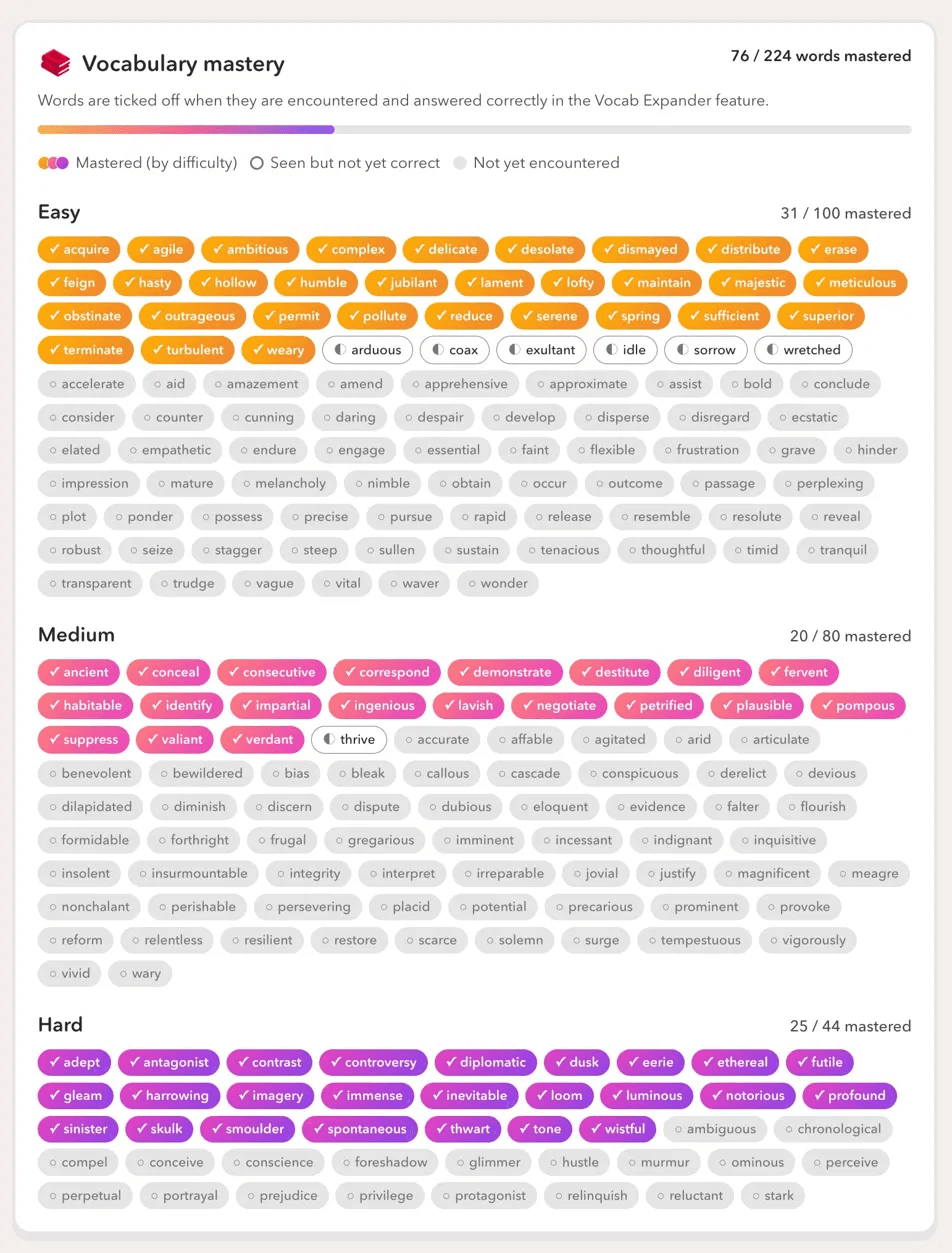
Alongside the questions themselves, there's a vocabulary mastery screen that maps every word in the bank – 224 in total, across all three tiers – colour-coded by status. Mastered words are highlighted, words seen but not yet answered correctly are marked and everything not yet encountered sits waiting.
You can see at-a-glance exactly where the gaps are. It's helpful to review this periodically – and if possible, use the words in conversation.
Why vocabulary matters beyond the vocabulary sections
A child who reads "the atmosphere was ethereal" and knows exactly what that evokes will write a better response to a mood question than one who has to guess.
A child who understands the difference between "reluctant" and "unwilling" – not just that they're roughly synonymous, but the nuance between them – will handle synonym questions in verbal reasoning more confidently.
In comprehension in particular, vocabulary knowledge is often the gap between a child who understands a passage and one who sort of understands it.
Available now, at no extra cost
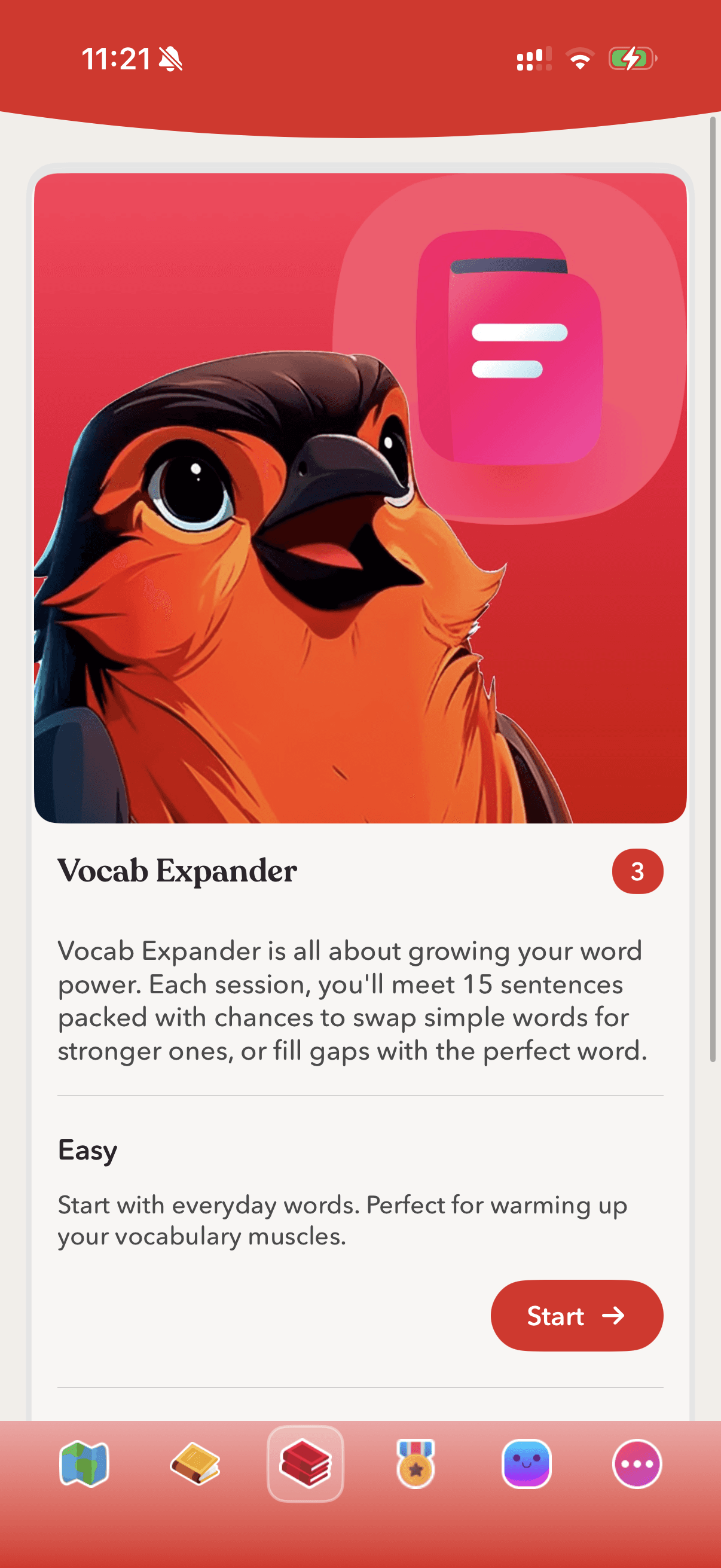
Vocab Expander is available to all HeyKitsu Premium subscribers – no new subscription, no add-on. If you're already on a premium plan, you'll find it in the app now.
Just navigate to English, and you'll see the red Vocab Expander icon:
If you're on our free plan, this is a good reason to upgrade. Premium gives you full access to every fragment across English, Maths, Verbal Reasoning and Non-Verbal Reasoning – and now Vocab Expander too – for £14.99 per month on an annual plan.

Adaptive practice that knows your child
HeyKitsu adapts every session to your child's level — building confidence on what they find tricky and stretching them where they're strong.
Written by
Jane CoplandConsultant and writer @ HeyKitsu
Jane is HeyKitsu's creative writing expert. A published author, she recently supported her son through the 11+, where he received an offer from his first-choice school.