"When am I ever going to need this?"
Sound familiar? My son Sam would sometimes complain about maths homework, wondering how calculating angles in a triangle would ever be relevant or useful.
But children don't realise how much maths they're using every day.
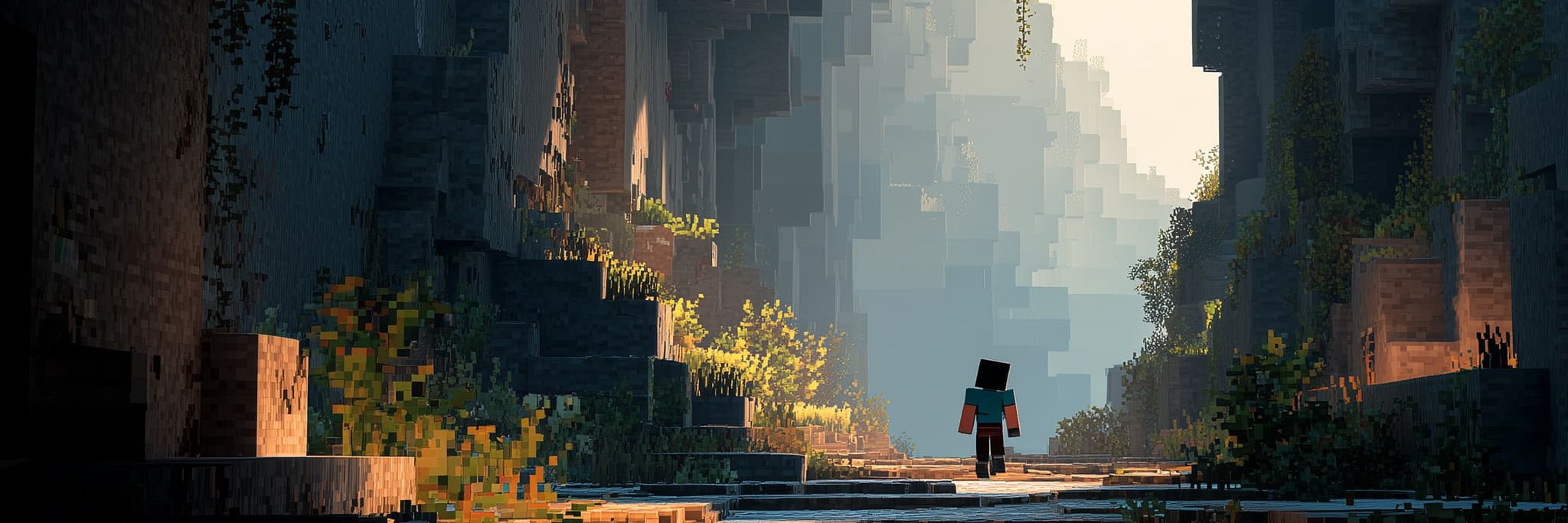
They're working out whether they have enough V-Bucks to buy a skin in Fortnite. They're calculating how many games their team needs to win to finish top of the league. They're figuring out if they have enough stone blocks to make a stone pickaxe in Minecraft.
That's multiplication, ratios and division – and they're doing it in their head, for fun, without being asked.
The gap between "I hate maths" and "I love maths" often isn't about ability. It's about relevance. When children can see why a skill matters – when it connects to something they actually care about – the resistance tends to melt away.
So rather than buying a workbook, try starting with something they're already obsessed with.
Minecraft: the world's best maths lesson
If your child plays Minecraft, they already understand ratios.
Here's a question: to craft a stone pickaxe in Minecraft, you need three stone blocks and two sticks. How many pickaxes can you make if you have 24 stone blocks and 14 sticks?
Your child needs to think about both resources. 24 ÷ 3 = 8 pickaxes from the stone. 14 ÷ 2 = 7 pickaxes from the sticks. The sticks run out first – so the answer is seven.
That's a multi-step division and ratio problem. It's exactly the kind of question that appears in 11+ papers. And your child will probably solve it in about ten seconds.
Try extending it: "You want to make 10 pickaxes. You have 12 sticks. How many more sticks do you need?" Or: "Stone blocks take 8 seconds each to mine. How long will it take to gather enough for 10 pickaxes?"
The game generates the context. You're just adding the question.
Football: the table never lies
Football and maths are inseparable, and Premier League season tables are surprisingly useful for practising arithmetic.
Here's a live example. Arsenal are on 70 points with six games left to play. A win is worth three points. What's the maximum number of points they can finish with if they win every remaining game?
6 × 3 = 18 70 + 18 = 88
Simple multiplication and addition – but for a child who cares about the result, it's gripping.
You can make these harder as they get more confident. If Arsenal are on 70 points and Manchester City are on 64 with seven games left, what's the minimum Arsenal need to guarantee the title, assuming City win all their remaining games? Now they're working with constraints, comparing values and reasoning backwards from a target. That's higher-level thinking dressed up as a football discussion.
Goal differences, average goals per game, percentage of games won – there's a term's worth of content in one season of football.
Pokémon: catch rates and percentages
If your child plays Pokémon – the games, the Trading Card Game or even just watches the anime – they're already comfortable with the idea of probability and percentages, even if they don't know the words yet.
In the games, wild Pokémon have catch rates. Magikarp is easy to catch; legendary Pokémon are famously hard. A Poké Ball has a catch rate of around 20% on a full-health legendary. An Ultra Ball doubles that to roughly 40%.
Ask: "If you have a 1 in 5 chance of catching it with each throw, how many throws might you expect to need?" That's fractions, division and expected value – all wrapped in a question your child has probably already thought about themselves.
The Pokémon Trading Card Game adds another layer. Cards have HP values and attack damage. If a Charizard has 330 HP and your Gardevoir does 100 damage per turn, how many turns to knock it out? That's division with remainders – and children will argue about it with total conviction.
Pocket money and saving
This one isn't glamorous, but it's the maths that matters most in the long run.
Children understand money far better when it's their own. If your child gets £3 a week and there's a game they want that costs £34.99, ask them to work out how many weeks they'll need to save. That's division, rounding and – for many children – a lesson in patience.
Make it more interesting: "If you saved half your pocket money every week instead of all of it, how much longer would it take?" Now they're comparing fractions and extending timelines.
If your child uses any gaming platform, you can work with the currency they already track. How many Robux is a particular item? How many pounds does that actually cost? What's the best value bundle? This is unit cost comparison – a classic maths topic – presented in terms they genuinely care about.
TV, YouTube and big numbers
Ten-year-olds are remarkably comfortable with very large numbers, because YouTubers and streamers throw them around constantly. "MrBeast has 477 million subscribers" makes perfect sense to a child who watches that content.
Use it. "If a YouTuber earns around £3 per 1,000 views, and their video has 12 million views, how much did they earn from that one video?"
12,000 × £3 = £36,000. That's multiplication with large numbers and a small amount of unit conversion – and it will hold their attention far better than a word problem about a farmer's field.
You can extend this into percentages. "YouTube takes 45% of all ad revenue. If the video earned £36,000, how much does the creator actually keep?"
Cooking: but make it relevant
Baking appears on every list of "fun maths activities for kids" and for good reason. Measuring flour is useful... but not all ten-year-olds are excited about Victoria sponge.
What they are excited about is making something they chose. If your child has a recipe for brownies, bubble tea, ramen or anything else they actually want to eat, the maths of scaling that recipe up or down becomes motivating.
A recipe for four people needs 300 ml of stock. You're making it for six. How much stock do you need? That's ratio. The recipe calls for 2 teaspoons of chilli flakes, but your child wants it half as spicy. That's fractions. These are real 11+ topics – and the result is something they'll actually eat.
The thing about relevance
None of this requires you to be a maths teacher. You just need to ask the question at the right moment – when your child is already engaged with something they care about.
The questions don't have to be hard. They don't have to be formal. They don't have to feel like school. "How many more points do they need?" and "Is that enough to buy it?" are both maths questions. They just don't feel like it.
Children who see maths as something that explains the world they're already living in tend to find it a lot less threatening. And that confidence – built in low-stakes, interesting contexts – is exactly what they'll need when they're sitting an exam.
If your child is preparing for the grammar school or independent school entrance exams, HeyKitsu covers the full range of maths topics they'll need – from fractions and ratios to word problems and algebra. It's designed to feel like a game rather than a worksheet, and the first three levels of every collection are permanently free.
You can try it at heykitsu.com.
Stephen ❤️

Your child's 11+ coach, on demand
Fun, game-like practice that adapts to your child's pace. No more nagging.