
The Best Apps in 2026 for 11+ Exam Practice (Compared)
Last updated: April 2026
If you're a parent researching 11+ preparation, you've probably noticed the market has exploded. Between adaptive platforms, traditional workbooks and flashy apps promising exam success, choosing the right tool can feel almost as stressful as the exam itself.
We've spent weeks testing the most popular 11+ preparation platforms – looking at price, adaptivity, subject coverage, mobile access and (perhaps most importantly) whether children actually enjoy using them.
Below is a full, honest comparison of the three options parents most frequently ask about: Atom Learning, Bond Online / CGP and HeyKitsu.
Quick Verdict
In a hurry? Here's the summary.
| Atom Learning | CENTURY Bond | HeyKitsu | |
|---|---|---|---|
| Monthly Cost | £59.99 (monthly) / £47.99 (annual plan) | £19.99 / £27.99 (annual plans) | £14.99 (annual plan) |
| Best for | Familiar interface if using Atom at school | Budget-conscious families supplementing with books | Best all-round: adaptive, engaging, and affordable |
| Subjects | English, Maths, VR, NVR | English, Maths, VR, NVR | English, Maths, VR, NVR |
| Adaptive learning | Yes (lesson only) | Yes | Yes (whole-curriculum) |
| Native mobile app | No (web only) | No (web only) | Yes (iPhone, iPad + web) |
| Free access | 5-day trial | 7-day trial | First 3 levels per collection (permanent) |
| Our rating | ★★★☆☆ | ★★★★☆ | ★★★★★ |
What Makes a Good 11+ App?
Before diving into individual reviews, it's worth understanding what actually matters. Not all platforms are created equal, and the "best" one depends on your child, your budget and which exams they're sitting.
Here are the four criteria we weighted most heavily:
1. Price and value for money 11+ preparation can be expensive. Tutors can cost £40–80 per hour, and fees add up quickly. A good platform should deliver real value without requiring a second mortgage. We looked at monthly costs, what's included, and whether you're getting enough content to justify the price.
2. Adaptive learning quality This is the single biggest differentiator between modern platforms and traditional resources. Adaptive learning means the platform adjusts question difficulty based on how your child is performing – harder questions when they're flying, easier ones when they're struggling. Done well, it keeps children in the "stretch zone" where real learning happens. Done badly (or not at all), children either get bored or overwhelmed. Apps like HeyKitsu go further and adapt the subject as well as difficulty – focusing on their weaker topics automatically.
3. Subject coverage The 11+ typically tests four subjects: English, Maths, Verbal Reasoning, and Non-Verbal Reasoning. This is table stakes for 11+ preparation – and we gave higher marks to platforms that cover all four subjects in a single subscription with a large, varied question bank.
4. Mobile app and portability Children in 2026 are digital natives. A platform that works seamlessly on a tablet – ideally through a proper native app rather than a mobile browser – is going to get more use. We also looked at whether children can practise on the go: in the car, at grandparents' houses or during “wasted time” between activities.
Atom Learning
Overview
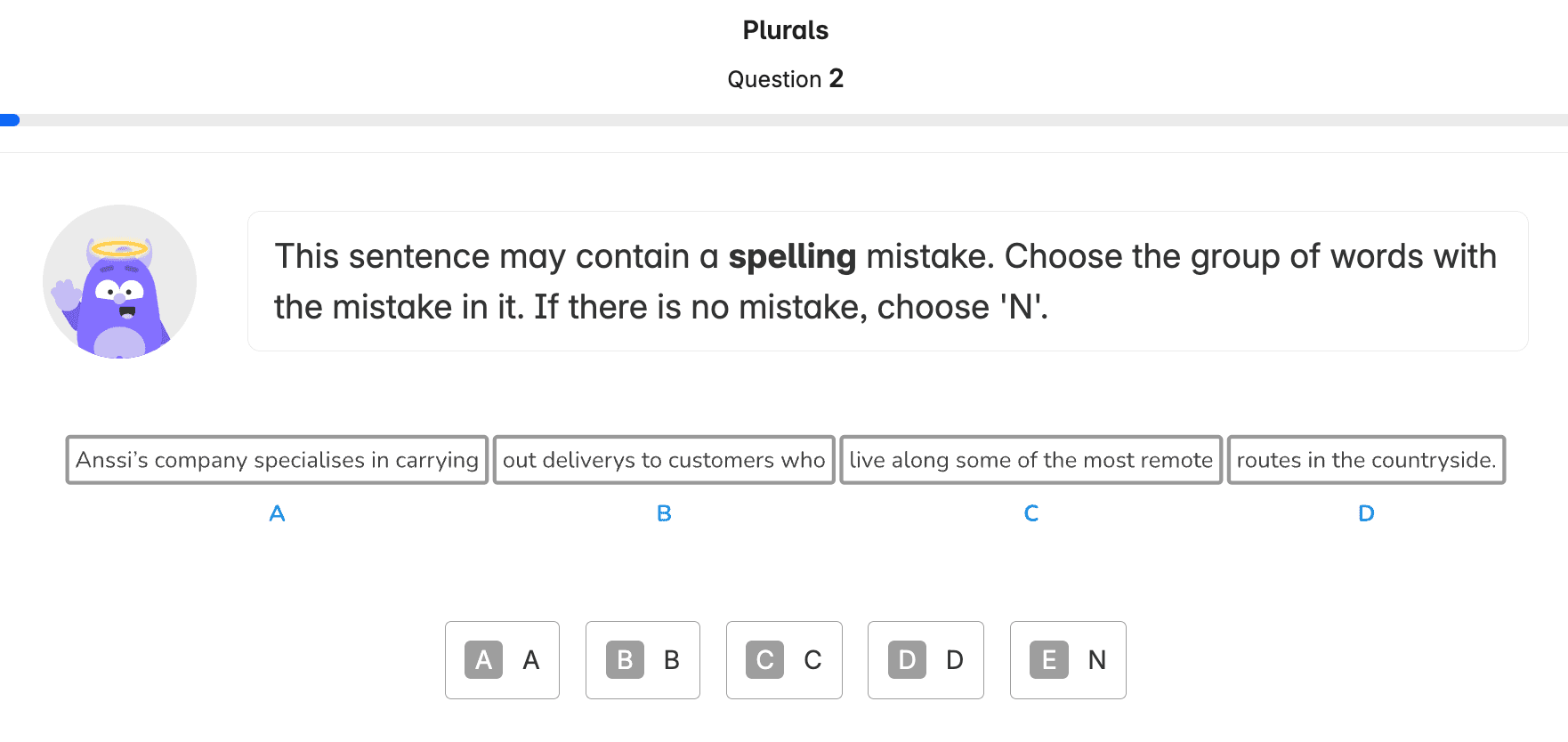
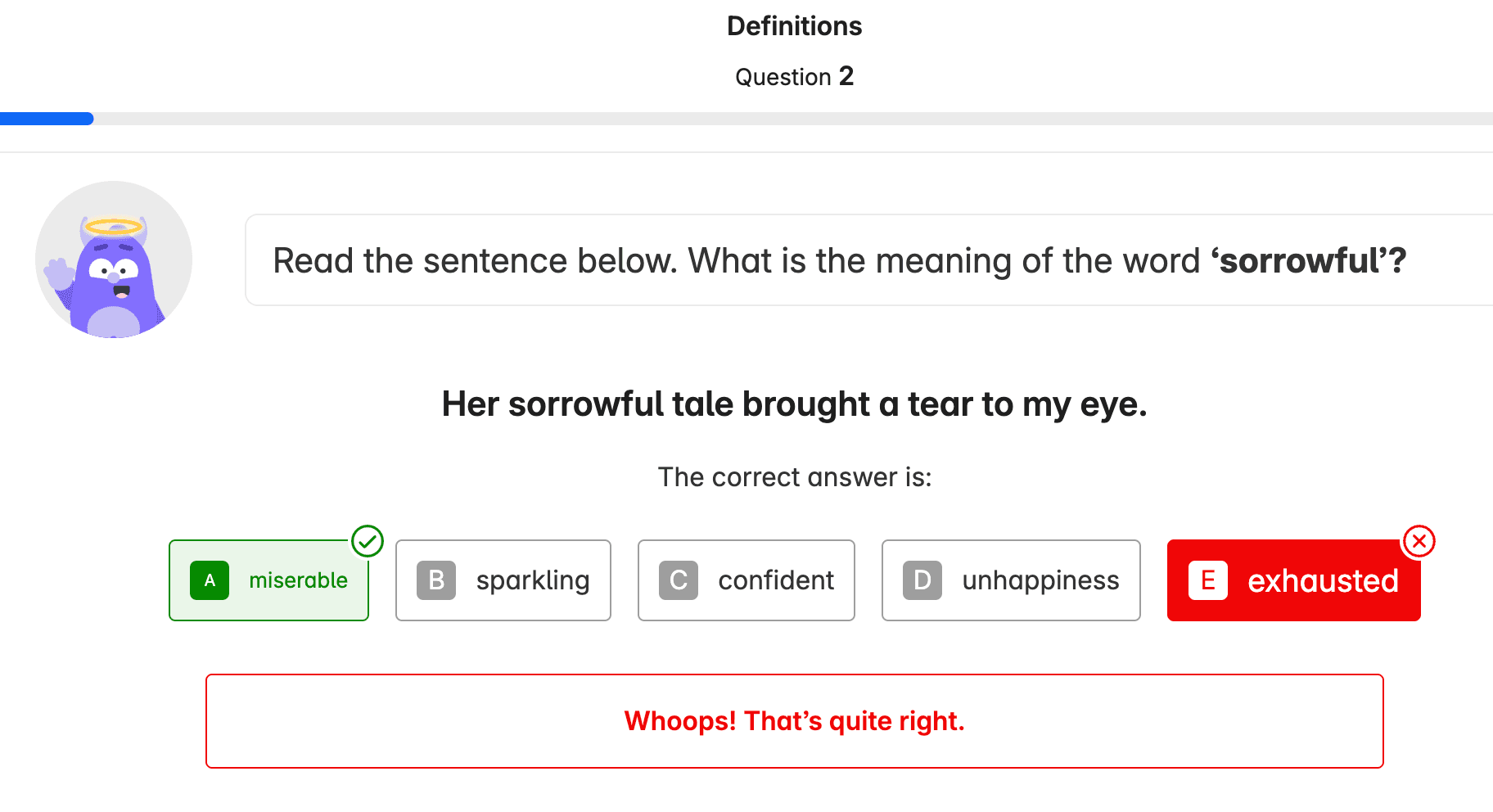
Atom Learning is the most established name in digital 11+ preparation. Founded in 2017 and used by over 1,000 UK schools through their Atom School product, it has serious credibility. Their Exam Prep plan covers English, Maths, Verbal Reasoning and Non-Verbal Reasoning, with adaptive practice, video lessons, help sheets, and unlimited mock tests.
What's good
Atom's biggest strength is its mock test engine. Each mock generates fresh questions, is timed to match real exam conditions, and produces a standardised age score (SAS) – the same scoring method used by grammar schools. For families who want to benchmark their child against the broader candidate pool, this is genuinely useful and something few competitors offer.
Atom also has a parent dashboard showing progress across subjects, time spent and areas of weakness. If your child's school uses Atom Prime, there's a nice continuity between school-set homework and home practice.
What's less good
The elephant in the room is price. At £59.99 per month for the Exam Prep plan and £69.99 for Exam Prep Plus (which includes the mock tests), Atom is comfortably the most expensive option in this comparison.
It’s up to £672 per year on an annual subscription – approaching the cost of a term's worth of weekly tutoring. The basic plan at £39.99/month covers English, Maths, and Science but drops VR and NVR, which rather defeats the purpose for 11+ families.
Atom is also web-only. There's no native app on the App Store or Google Play. It works in a browser and is reasonably responsive on an iPad, but it's not as polished as a purpose-built app.
You lose native features like push notifications and the kind of fluid touch interactions children expect from Duolingo or their favourite games. Several Trustpilot reviewers note that the experience can feel a bit like a "educational tool" rather than something children are excited to open.
Some parents have also flagged frustrations with cancellation and billing. One Trustpilot reviewer described being charged for over a year after their child stopped using the platform, with the auto-renewal catching them out. This is a common issue across subscription services, but it's worth being aware of.
Pricing
- Exam Prep plan: £59.99/month (or £47.99 billed annually)
- Exam Prep Plus: £69.99/month (or £57.99 billed annually)
- Basics (Eng/Maths/Science only): £39.99/month
- Free trial: 5 days
Best for
Families whose child's school uses Atom, or who want the strongest mock test and benchmarking features. If knowing your child's standardised age score relative to other candidates is a priority, Atom delivers this better than anyone.
Bond Online
Overview
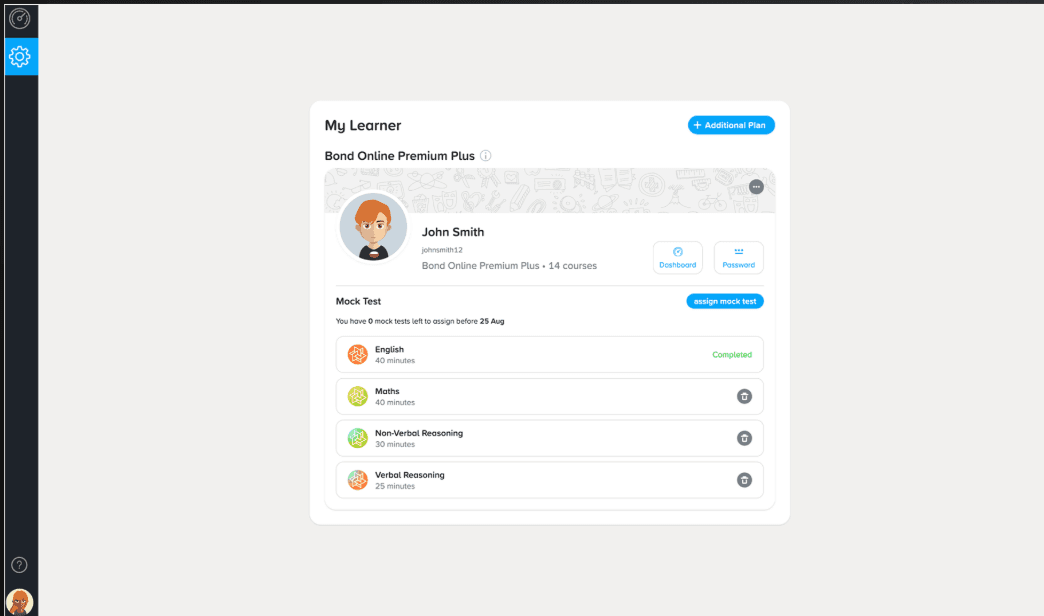
Bond (created by Oxford University Press) is the name most parents think of first when they hear "11+". Bond books have been the backbone of 11+ preparation for decades, and their range of assessment papers, workbooks and "How to do" guides is extensive.
More recently, they've launched Bond Online – a digital subscription with practice tests, progress tracking, and exam-style questions.
Together with CENTURY Tech, they also offer Online Premium and Online Premium Plus, which adds introductory videos, guidance, practice questions and mock tests.
What's good
The standout advantage is price. Bond Online costs just £7.50 per month (or £65/year), making it by far the cheapest digital option in this comparison. Online Premium is £19.99 per month (billed annually) and Online Premium Plus is £27.99 (billed annually).
Bond is also endorsed by ISEB, which carries weight with parents targeting independent school entrance exams. The content is well-written and covers all four subjects.
Bond Online's progress tracking is functional, but you need the more expensive Online Premium or Online Premium Plus to benefit from the personalised pathway and guidance. You can see your child's scores across different test papers and identify weaker areas. For a parent who wants a simple, no-frills overview of how their child is doing, it does the job.
What's less good
The online question bank is also relatively small. Multiple parent reviews mention that questions start repeating after a few months of regular use, which limits the platform's longevity. One Trustpilot reviewer recommended "doing occasional months mixed in with other resources" rather than relying on Bond Online exclusively.
There's no native app – Bond Online is web-based. For children who are more engaged by screens than paper, or who need to practise on the go, this can be a limitation.
Pricing
- Bond Online: £7.50/month or £65/year
- CENTURY Bond Online Premium: £19.99/month (billed annually)
- CENTURY Bond Online Premium Plus: £27.99/month (billed annually)
- Free trial: 7 days
Best for
Budget-conscious families who want well-written, exam-aligned practice material without a large monthly outlay. Also excellent as a supplement alongside an adaptive platform – and their the physical books are great for timed practice under exam-like conditions.
HeyKitsu
Overview
HeyKitsu is a newer entrant to the 11+ space, but it's arrived with an unusually strong pedigree. The platform was co-founded by a team who’ve worked on games and apps for King (Candy Crush), Facebook and PlayStation, which shows in the product's design.
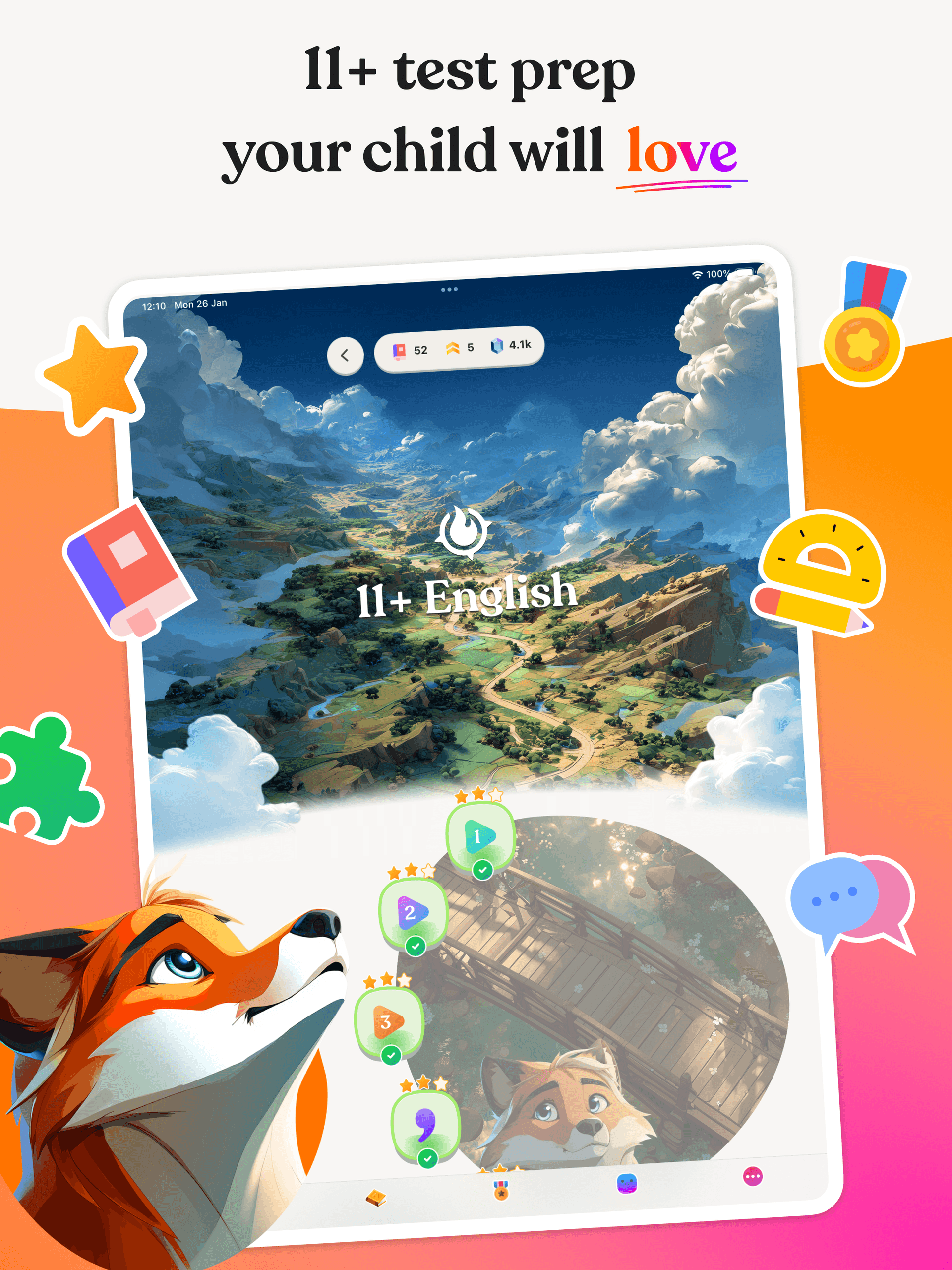
It's built from the ground up as a native iOS app in addition to a web platform, covering all four 11+ subjects: English, Maths, Verbal Reasoning, and Non-Verbal Reasoning. The question bank exceeds 100,000 questions, and the adaptive engine uses an ELO rating system (similar to chess ratings) that adjusts across the entire curriculum – not just within individual topics.
The most immediately noticeable thing about HeyKitsu is that it’s familiar to children who’ve used language learning apps or games. Children are encouraged to focus on short sessions, streak tracking and a sense of achievement that makes them want to come back.
What's good
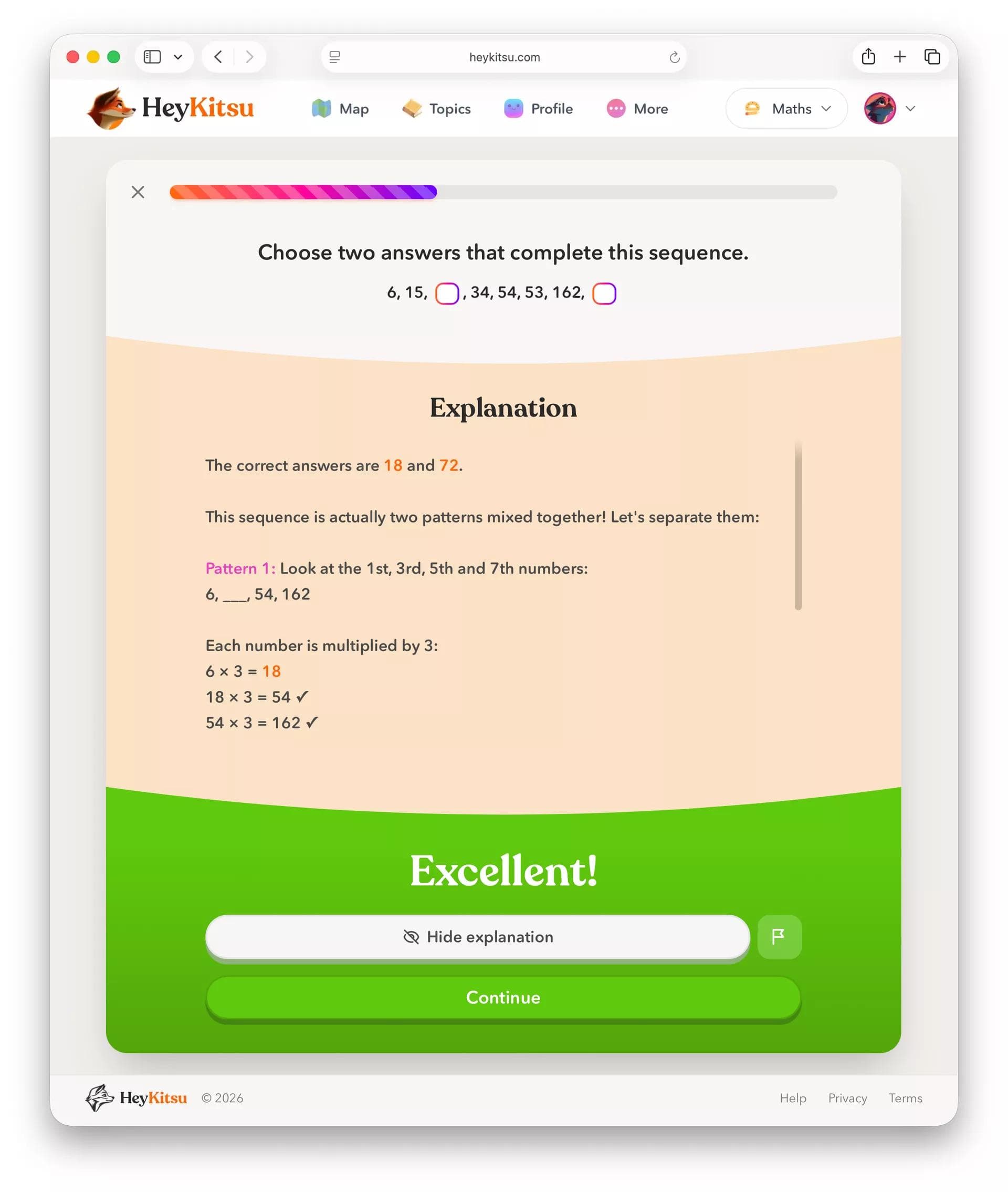
The adaptive learning engine is HeyKitsu's standout technical feature. Unlike platforms that adapt difficulty only within a single topic (so you might get harder fraction questions, but they're still all fraction questions), HeyKitsu's system adapts across the whole curriculum.
If your child is strong at geometry but weak at graphs, the platform will naturally spend more time on graphs and less on geometry. Each child’s journey is personalised to ensure every minute spent on HeyKitsu is productive.
The engagement factor is where HeyKitsu really separates itself. Five character companions – Kitsu the fox, Ember the cardinal, Kodi the bear, Monch the turtle and Nibbles the mouse – guide children through the content. The map, level-up mechanics and reward systems aren't just cosmetic – they're designed using the same psychology that makes apps like Duolingo so habit-forming. For the "reluctant learner" – the child who groans at the sight of a workbook – this can be transformative.
Value for money is strong. At £14.99 per month on the annual plan (£179.99/year), HeyKitsu is a quarter of the price of Atom’s Exam Prep plan while offering a large question bank and all four subjects included.
The first three levels of every collection are permanently free (not a time-limited trial), giving families a genuine opportunity to test the platform before committing.
Being a native iOS app is a bigger deal than it might sound. The interface is designed for touch rather than retrofitted from a desktop web app. It loads quickly, feels responsive and sits alongside the other apps children already use daily. Optional push notifications remind children to keep their streaks going. There's also a web version for families who prefer working on a laptop or desktop.
The question quality is high. Content is written in partnership with specialist 11+ educators, aligned to GL Assessment and ISEB formats, and covers the full KS2 curriculum. Explanations are written in clear, child-friendly language with step-by-step breakdowns.
What's less good
HeyKitsu is newer than Atom, which means it doesn't yet have the same brand recognition or the depth of parent reviews online. If you're the type of parent who feels reassured by a platform that thousands of others have used, this might give you pause – though the quality of the content itself is on par with established competitors.
The platform currently focuses on iOS and web. If your household is Android-only, you'll need to use the web app rather than a native Android app. For most 11+ families using iPads, this isn't an issue, but it's worth noting.
HeyKitsu doesn't yet offer full-timed mock exams in the way Atom does, with standardised age scoring and school-specific benchmarking. If mock test simulation is your top priority, Atom still has the edge here. That said, HeyKitsu's adaptive question bank means children are continuously practising at the right difficulty level, which arguably provides better day-to-day preparation than periodic mock tests.
Pricing
- Annual plan: £14.99/month (billed as £179.99/year)
- Monthly plan: £24.99/month
- Free access: First 3 levels of every collection (permanent, not time-limited)
Best for
The best all-round option for most families. HeyKitsu combines genuinely adaptive learning, all four subjects, a 100,000+ question bank and a native mobile app at roughly half the price of the market leader. The gamified experience makes it particularly strong for children who need motivation and engagement, not just more questions.
What Real Parents Say
We reviewed hundreds of parent comments across the App Store, Mumsnet, Trustpilot and parent forums to understand what families actually experience with each platform. Here's a balanced summary.
On Atom Learning
Parents are broadly positive about Atom's content quality, particularly for NVR and VR preparation. The mock tests are frequently praised for closely matching real exam conditions.
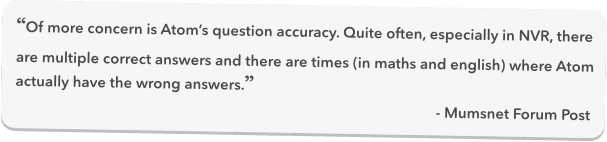
However, price is the most common concern, by some distance. One Mumsnet parent described alternating months – subscribing for intensive mock test periods, then cancelling and switching to paper resources – specifically because of the cost. Another noted on Trustpilot that they'd been charged for over a year after their child stopped using the platform, ending up more than £700 out of pocket. The phrase "it's expensive" appears in the majority of Mumsnet threads about Atom.
A recurring theme is that Atom works best for self-motivated children. Several parents reported that their child only used it a handful of times, making the subscription feel like a waste. One put it bluntly: the money would have been better spent on a tutor if the child wasn't naturally inclined to sit and work through questions independently.
Parents also flag that Atom's scores can be slightly pessimistic compared to real exam results. Multiple Mumsnet users report needing to add 7–10 points to Atom's SAS to approximate real-world scores – useful information if you're using Atom scores to gauge school targets.
On Bond / CGP
Bond Online is universally acknowledged as reliable and affordable. Parents appreciate the straightforward question practice, clear formatting and low price point. One Trustpilot reviewer described Bond Online as "instrumental in building skills and measuring what needed work", praising the ability to direct their child towards specific weak areas.
The main criticism is repetition. Several reviewers mention questions coming around again after a few months of regular use on Bond Online, with one recommending "occasional months mixed in with other resources" rather than long-term continuous use. Parents also note that Bond's basic tier isn’t adaptive, which can be a disadvantage for children preparing for ISEB or other adaptive exams.
Physical Bond books remain popular as a complement to digital platforms, not a replacement. A common Mumsnet recommendation is to use an adaptive platform for daily practice and Bond/CGP books for timed paper-based practice, particularly in the final months before the exam.
On HeyKitsu
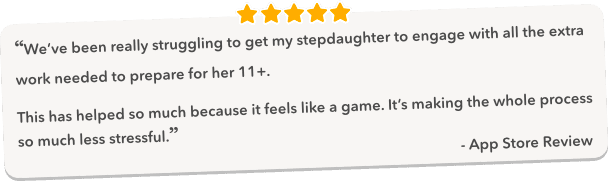
As a newer platform, HeyKitsu has fewer forum mentions than Atom, but early feedback is positive. Parents consistently highlight that their children enjoy using it – a factor that shouldn't be underestimated when you're asking a 9 or 10-year-old to do extra practice after a full school day.
The gamified approach and character companions are described as a “lifesaver” by one reviewer, keeping children coming back without parental nagging.
Parents familiar with the 11+ space have also commented positively on the question quality and curriculum coverage, noting that the adaptive engine avoids the frustration of children repeatedly being tested on things they already know.
Head-to-Head Scoring
We scored each platform out of 5 across our four key criteria, weighted by importance to most 11+ families.
| Criteria | Weight | Atom Learning | Bond / CGP | HeyKitsu |
|---|---|---|---|---|
| Price / value | ●●●●● | ★★☆☆☆ | ★★★★☆ | ★★★★☆ |
| Adaptive learning | ●●●●○ | ★★★★☆ | ★★★☆☆ | ★★★★★ |
| Subject coverage | ●●●○○ | ★★★★★ | ★★★★★ | ★★★★★ |
| Mobile app / portability | ●●○○○ | ★★☆☆☆ | ★★☆☆☆ | ★★★★★ |
| Overall | 3.1 / 5 | 3.6 / 5 | 4.6 / 5 |
How we calculated the overall score: Each criterion is weighted 5 to 2 (matching the importance ranking above), multiplied by the star rating and divided by the maximum possible score. This means price and adaptive learning quality carry more influence than mobile portability – reflecting what most parents tell us matters most.
Breaking down the scores
Atom Learning – 3.1/5: The quality of the platform is high, and the mock test engine is the best in the market. But at £60/month, you're paying a premium – and the lack of a native app feels increasingly outdated. The adaptive technology within topics is solid but doesn't extend across the whole curriculum the way HeyKitsu's does.
Bond Online / CGP – 3.6/5: Solid price, and the physical books are still excellent for timed exam practice. For the 11+, the questions are as close to what children will see on the day. But the tech is limited and can make preparation feel like a drag.
HeyKitsu – 4.6/5: The strongest combination of adaptive learning, subject coverage, engagement and value. The whole-curriculum adaptive engine means children are always working on what they most need to improve. The native app and gamified experience drive daily engagement in a way that web-based platforms struggle to match. The only area where it doesn't lead is mock tests.
Frequently Asked Questions
Can I use more than one platform? Absolutely, and many families do. A common combination is using an adaptive platform like HeyKitsu for daily practice and a set of GL or Bond sample papers for occasional timed paper practice. This gives you the best of both worlds: personalised digital learning plus exam-condition simulation with pencil and paper.
My child's school uses Atom School. Should I use Atom at home too? There's an argument for continuity – your child will be familiar with the interface, and the parent dashboard integrates school and home progress. However, using a different platform at home (like HeyKitsu) can actually be beneficial, as your child gets exposure to a wider range of question styles and isn't over-reliant on a single source.
When should we start 11+ preparation? Most education consultants recommend beginning focused preparation in Year 4 or early Year 5, with light exposure to reasoning question types from Year 3. Platforms with adaptive engines are particularly useful for early starters, as they naturally calibrate to your child's current level regardless of when you begin.
Is an app really as effective as a tutor? For foundational practice and building familiarity with question types, yes – and in some cases more so. Adaptive platforms can deliver hundreds of precisely calibrated questions per week, something no tutor can match. However, tutors are valuable for exam technique, motivation and addressing specific conceptual gaps. Many families find a platform plus occasional tutoring is more effective (and more affordable) than tutoring alone.
Our Recommendation
For most families preparing for the 11+, HeyKitsu offers the best balance of quality, adaptivity, engagement, and value. Its whole-curriculum adaptive engine ensures your child is always working on the areas that need the most attention, the gamified experience keeps children motivated through what can otherwise be a gruelling preparation period, and at £14.99/month on the annual plan, it’s accessible to a much wider range of families than the premium alternatives.
If mock test benchmarking is your absolute top priority – particularly standardised age scoring against other candidates for a specific school – Atom Learning remains the strongest choice for that specific use case, though you'll pay a premium for it.
Whatever you choose, the most important thing is that your child practises consistently. The best platform in the world won't help if it sits unused – and a slightly less sophisticated one that your child actually looks forward to opening every day will deliver far better results.

Ready to try HeyKitsu? The first three levels of every collection are free – no credit card required. Start practising at heykitsu.com or download the app from the App Store.

Learning on the go
HeyKitsu works on iPhone, iPad, and web — perfect for a few quick questions between everything else.
Last reviewed:
Written by
HeyKitsu Team